

 Supplying Cleanrooms Online for Over 20 Years
 Tailored Account Managed Solutions

The UK is making strides to move towards a circular economy, following the principles of the waste hierarchy: Reduce, Reuse, Recycle.
Over the past several years, the government has banned a variety of single-use plastic items as an effort to reduce the amount of plastic entering the natural environment and mitigate the impacts on human health (Legislation, 2025).
Now, a ban on wet wipes is due to come into force in spring 2027, but how does this effect cleanroom environments and who is eligible to continue using single-use plastic wet wipes? In this blog, we'll breakdown the upcoming wet wipe ban, and what this means for your controlled environment.
What is the UK wet wipe ban?
The wet wipe ban is the discontinuation of selling or supplying wet wipes containing plastic across the UK. First introduced by Parliament in November 2025, and due to come into effect in May 2027 following an 18-month transition period, the wet wipe ban aims to reduce microplastic pollution and prevent sewage blockages, following growing environmental concerns and reports from water companies estimating remediation costs at £200m annually (BBC, 2025).
The government has identified plastic-containing wet wipes as a major contributor to plastic pollution in rivers and oceans, disrupting the health of aquatic ecosystems and entering the food chain. As a result, manufacturers and retailers supplying single-use wet wipes for individual consumer use must transition to plastic-free alternatives by May 2027.
Under the new legislation, a "wet wipe" is defined as "a non-woven piece of fabric which has been pre-wetted and which is not designed or intended to be reused" with "plastic" referring to a "material consisting of polymer [. . .] to which additives or other substances may have been added, and which can function as a main structural component of final products" (Legislation, 2025).
In summary, the wet wipe ban will target any single-use, plastic-containing presaturated wipes including baby wipes, cosmetic wipes, household cleaning wipes, etc. From May 2027, a person or business found supplying wet wipes containing plastic may be liable on summary conviction to a fine.
Are cleanrooms exempt from the UK wet wipe ban?
Following the announcement of the wet wipe ban, concerns were raised that non-plastic alternatives may be inadequate in some circumstances. Plastic wet wipes intended for cleanroom applications are specifically designed to meet ISO and GMP requirements, offering features such as low-linting properties, chemical compatibility, sealed edges, and enhanced durability - characteristics that aren't always offered from alternative materials.
As a result, it has been agreed that business-to-business requirements, including use in medical settings and cleanroom environments, are exempt from the ban with plastic-containing wet wipes available for purchase and use for legitimate, professional purposes (Gov.uk, 2025).
The UK government has confirmed that the following, amongst other, industries can still purchase and use wet wipes:
- Medical use: Wet wipes containing plastics are still permitted for "medical purposes". Healthcare professionals can use and supply them.
"Medical purposes" means the purposes of preventative medicine, medical diagnosis, medical research, and the provision of medical care and treatment - The Environment Protection (Wet Wipes Containing Plastic (England)) Regulations 2025, Section 6(2)(b)
- Pharmacies: Registered pharmacies can sell wet wipes containing plastic, but only to customers who request them.
- Business use: Wholesalers and manufacturers can continue to sell and supply wet wipes containing plastic to businesses, charities, and public sector organisations.
At Cleanroomshop, we'll continue to stock and supply plastic-containing wet wipes and dry wipes from leading brands for professional and commercial use following the UK wet wipe ban. Buyers of wet wipes must ensure compliance and demonstrate that wipes are purchased and used only within the scope of permitted professional activities. Therefore, eligible organisations should retain documentation demonstrating compliance for audit and inspection purposes.
How should cleanrooms dispose of single-use, plastic wet wipes?
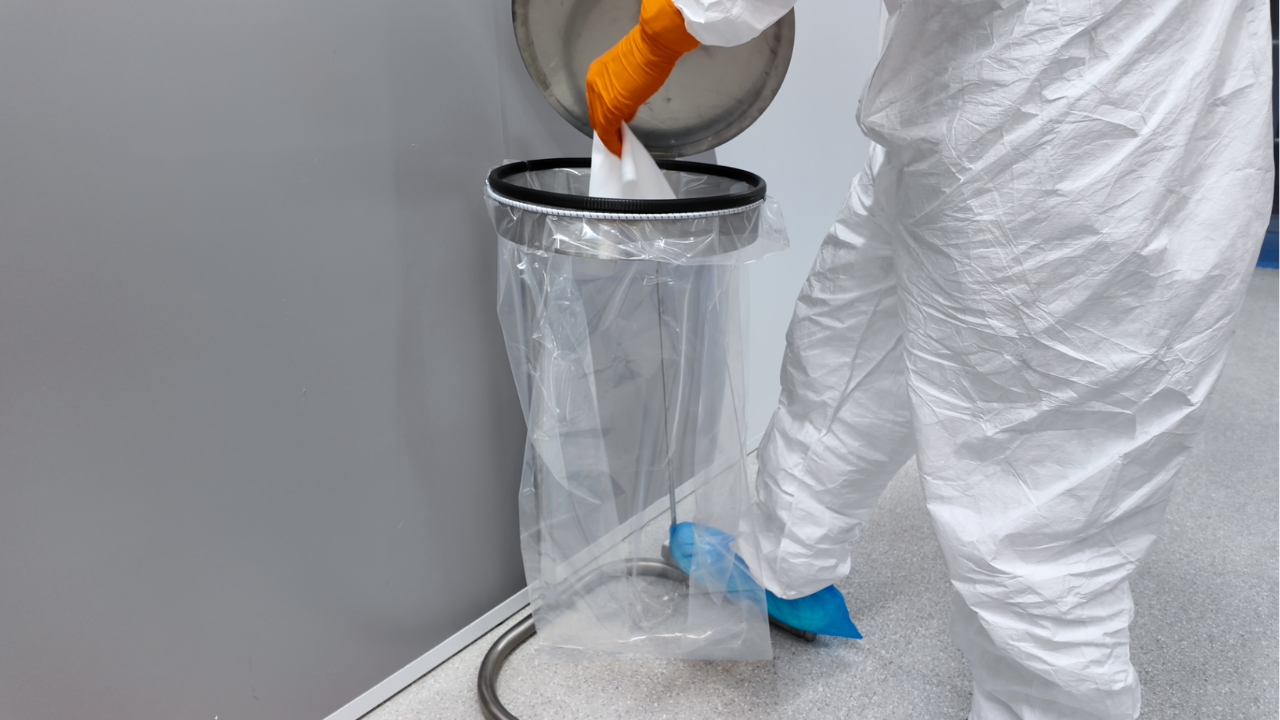
Even though cleanrooms are permitted to continue using single-use wet wipes as part of their cleaninig and disinfection protocols, they should still make efforts to ensure these are disposed of correctly - not only for contamination control purposes but also for environmental responsibility.
Contaminated wipes should be disposed of promptly within appropriate, designated waste containers or fully enclosed cleanroom bins, and recycled when able. Each cleanroom has its own set of priorities and unique risks, therefore it's best practice to follow disposal procedures set in your facility's waste management policies.
Cleanroomshop's commitment to environmental sustainability
We're committed to reducing our environmental footprint and promoting sustainable practices across our supply chain and with our customers. We continue to proactively implement innovative solutions to minimise waste, conserve resources, and support the well-being of our communities:
- Collaborate with our suppliers including DuPont, Ansell, and Purus, who share our dedication to environmental responsibility and innovation.
- Transitioned to a 100% renewable energy supply, ensuring our offices are powered by clean energy sources such as wind, solar, and hydro.
- Launched a tree-planting initiative to support reforestation efforts worldwide through our Service Level Agreements.
If you need further guidance or recommendations on the cleanroom wipes available on Cleanroomshop, don't hesitate to reach out to a member of our dedicated team, here. For more information on how the new rules affect your business, visit Gov.uk or contact [email protected].