

 Supplying Cleanrooms Online for Over 20 Years
 Tailored Account Managed Solutions

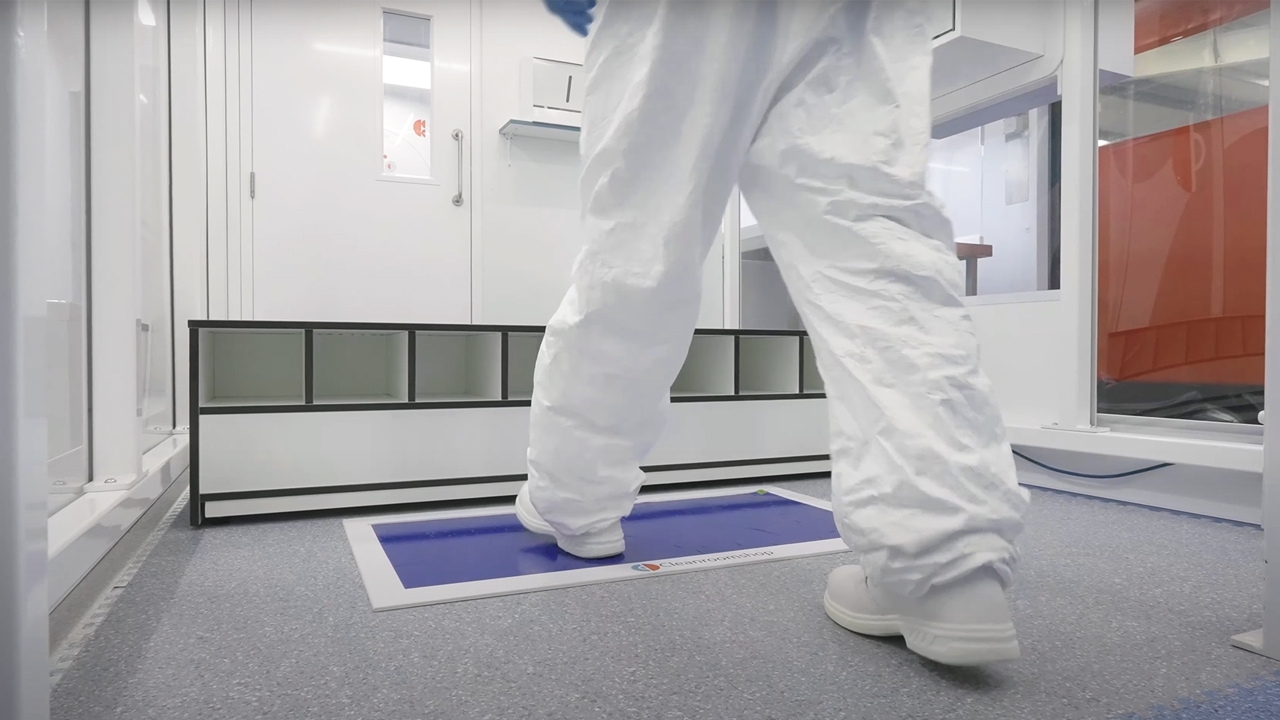
Tacky mats are a simple, low-cost, yet highly effective contamination control tool that prevents 99% of foot borne contaminants from entering your clean space (Purus International). However, like all cleanroom equipment and protocols, tacky mats only work if they’re used and maintained correctly.
In this blog, we break down the common mistakes cleanroom operators make when using tacky mats within their facilities, and how you can look to get the most out of this contamination control solution.
What are tacky mats?
Tacky mats are compressed layers of adhesive mats designed to capture dirt, dust, and debris from the footwear of personnel and wheels of equipment before entering a controlled space.
Placed at the entry points of a cleanroom, tacky mats are a highly recommended first line of defense for capturing particulates and minimising a contamination incident.
Each layer is fully coated with a particle-grabbing adhesive and constructed using low density polyethylene film, with numbered tabs that can be used for reporting purposes and to easily peel and reveal a new layer.
The dos and don'ts of using a tacky mat
Despite their simplicity, best practices must be followed when using a tacky mat within a controlled space to ensure they’re working as they should be and don’t cause any hazard or Health & Safety issues. Below is our top 8 dos and don’ts when using a tacky mat:
❌ Don't
Clean or wipe the tacky mat using any cleaning or disinfection agents.
✅ Do:
Reveal a new, clean mat by peeling the contaminated layer once visibly soiled, or in line with your risk assessments.
Top Tip
Tacky mats are a disposable, single-use contamination control item like gloves, face masks, or overshoes. By cleaning the tacky mat, you run the risk of releasing and spreading captured particles, damaging the below clean layer, or causing the mat to lose its tackiness.
❌ Don't
Allow the tacky mat to move or slide around on the floor.
✅ Do:
Ensure the mat is firmly secured to the ground to avoid movement and shifting when in use.
Top Tip
It’s best practice to ensure the tacky mat is continuously flush against any entry points within the cleanroom. If the mat is moving around, this can result in contaminants being missed or even pose as a Health & Safety issue for operators. Low-profile tacky mat frames are recommended to prevent any curling or shifting.
❌ Don't
Walk over the tacky mat along the short side.
✅ Do:
Orientate the tacky mat so cleanroom operators and wheeled equipment will pass over the mat on the long side.
Top Tip
For those who use rectangular tacky mats, always rotate the mat long-ways so the short edge is parallel with any doors or entry points. This ensures that the maximum amount of contaminants are captured from the operator’s feet or equipment’s wheels.
❌ Don't
Replace the tacky mat by tearing the contaminated layer from one side to the other.
✅ Do:
Replace the mat by peeling the contaminated layer from each corner, gathering the corners in the centre to envelope and trap contaminants. Then, remove the tacky mat layer from the centre.
Top Tip
Peeling the tacky mat layer from one side to the other may release contaminants back into the clean space. Gathering the four corners in the centre ensures you trap the maximum number of particles.
❌ Don't
Place the tacky mat too far away from the entry point.
✅ Do:
Ensure the tacky mat is flush with any doors or entry points.
Top Tip
Any gaps will make the tacky mat redundant as contaminants will be removed from the operator’s feet or equipment’s wheels only to then go back onto the feet or wheels before entering the controlled space.
❌ Don't
Opt for tacky mats that are too small for your entry points.
✅ Do:
Tacky mats should be at least ¾ length of the entry point.
Top Tip
Contaminants may be missed from being captured from footwear or wheels if the mat is too narrow for the entry point.
❌ Don't
Step on the mat too few times.
✅ Do:
Operators should step on the mat at least 4 times (2 times per foot) before entering a controlled space.
Top Tip
By ensuring you’ve stepped along the adhesive surface at least twice per foot, you’re maximising the number of contaminants captured. Wheels should also make a complete rotation along the mat.
❌ Don't
Choose a tacky mat based on colour preferences.
✅ Do:
Choose a tacky mat that will improve visibility and allow you to easily identify the type of contamination you can expect to capture.
Top Tip
It's best practice to implement a tacky mat with a colour that easily allows your operators to spot and assess when the mat needs to be replaced. For instance, blue tacky mats are ideal for highlighting lighter contaminants suchas as silicone dust.
Tacky mats on Cleanroomshop
Maintaining cleanliness within a cleanroom requires a multi-level approach to capture and remove contaminants before they impact your production processes. Our range of Purus EnviroTack Tacky Mats are a durable, low-cost, and environmentally friendly solution that effectively prevents contaminants from entering your facility. Shop the full range of tacky mats below.