


 Supplying Cleanrooms Online for Over 20 Years
 Tailored Account Managed Solutions

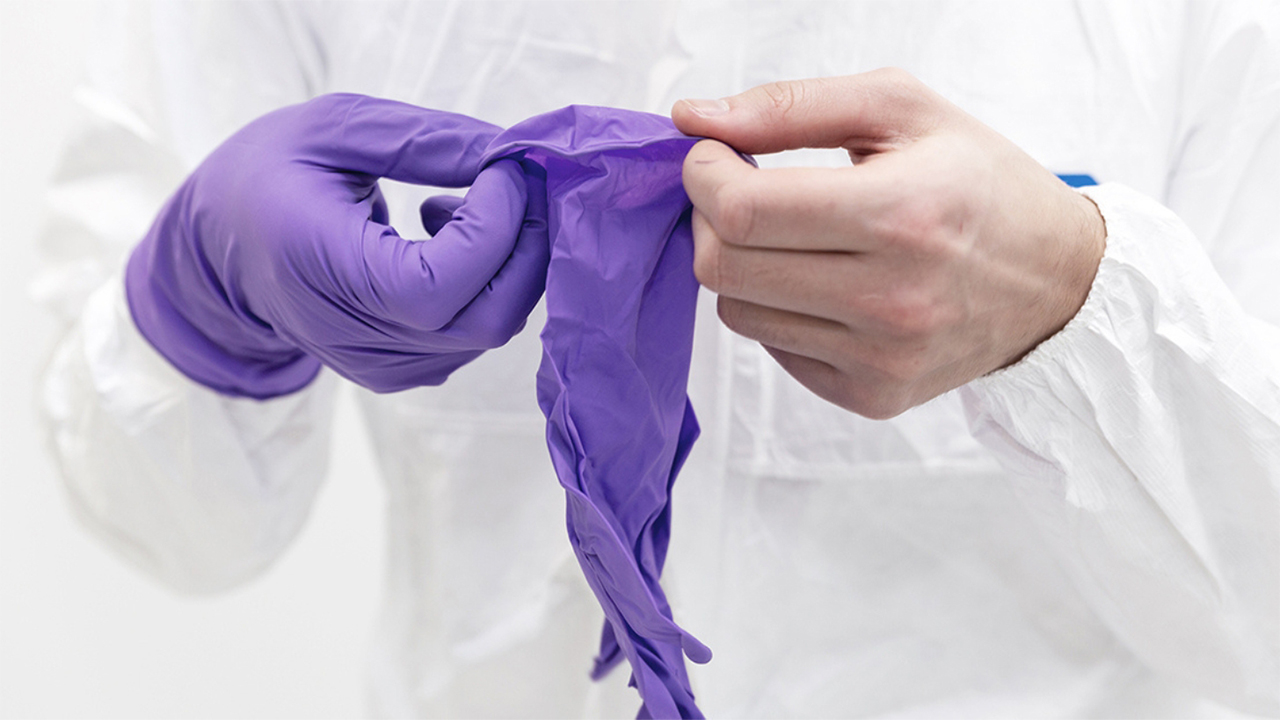
Choosing the right cleanroom glove is a vital part of maintaining optimal contamination control while protecting both operator and application. With latex and nitrile among the most commonly used cleanroom glove material, understanding the differences between them can help facilities select the most suitable option for their processes.
Both latex and nitrile cleanroom gloves offer reliable protection, but their properties differ in area across dexterity, sensitivity, chemical resistance, durability, and allergy considerations. The right choice will depend on the requirements of the application, the cleanroom environment, and the level of protection required.
In this blog, we explore the key differences and benefits of latex and nitrile cleanroom gloves, as well as key considerations to help you select the right material for your cleanroom.
What are cleanroom gloves?
Cleanroom glvoes are specialised PPE that are designed to protect the wearer's hands and the facility's applications by minimising the risk of injury from hazards while preventing particle shedding and transfer of micro-organisms that would otherwise compromise product integrity and operator safety.
In EU GMP-regulated facilities, sterile, disposable gloves are mandated in grades A and B, with double-gloving (one pair for gowning and a second pair donned for cleanroom work) required to reduce the risk of contamination. The requirement for gloves in grades C and D must be considered through a risk-based approach, with a requirement when performing activities considered to be a contamination risk.
Under ISO 14644, cleanroom glove type aren't mandated and are instead selected based on contamination control needs, risk, and process demands.
With multiple options available across material, sterility, sizes and lengths, and properties, the choice of cleanroom glove ultimately depends on your cleanroom classification, application, and the facility requirements.
What are latex cleanroom gloves?
Latex cleanroom gloves are a popular choice amongst controlled facilities as they offer high levels of dexterity and touch sensitivity, whilst minimising particle emissions and entrapment. Due to its natural origins, latex cleanroom gloves are a bio-based material and can biodegrade under suitable conditions, offering a more economical option for those with budget and environmental priorities.
Latex cleanroom gloves also feature moderate chemical and puncture resistance, without compromising operator comfort or flexibility, making these naturally elastic cleanroom gloves a preferred choice within environments where reliable protection, high dexterity, and touch sensitivity for the precise assembly of sensitive components is essential.
What are nitrile cleanroom gloves?
Nitrile cleanroom gloves are also a popular choice amongst controlled facilities as they provide durable hand protection with excellent resistance to punctures, tears, and a wide range of chemicals. Nitrile is a synthetic rubber made from the copolymerisation of the monomers acrylonitrile and butadiene.
Nitrile gloves may not provide the same level of sensitivity or dexterity as their natural counterpart, latex, however, their formulation creates a particularly durable wear, and in some cases anti-static, making them ideal for demanding cleanroom environments requiring high levels of barrier protection.
Latex vs nitrile cleanroom gloves
Opting for latex or nitrile cleanroom gloves depends on your process requirements and priorities. Latex cleanroom gloves are a popular choice for controlled facilities due to their benefits, however, can cause allergy issues amongst wearers.
Nitrile cleanroom gloves are often selected as a direct alternative to latex, eliminating exposure to natural rubber latex proteins whilst improving barrier protection; however, operators may see a decline in the features that make latex so popular.
Cleanroom glove composition and operator experience
In terms of operator experience, latex cleanroom gloves offer high levels of tactile sensitivity and elasticity, conforming to the operators' hands which supports fine motor control, flexibility, and comfort during long periods of wear. However, latex commonly causes allergies or dermatitis, triggering Type I or Type IV skin irritation in personnel or contaminating applications with allergenic residues.
Nitrile cleanroom gloves are naturally latex-free, making them a great alternative where latex sensitivity or allergy is a concern. Unlike latex cleanroom gloves, nitrile cleanroom gloves can be easily donned without the use of powder, further reducing the risk of an allergic reaction from the skin irritant. However, particular formulations (less acrylonitrile) can result in a decrease in flexibility and dexterity, lowering sensitivity for precise handling applications.
Latex is a material that's derived from plants (polyisoprene), with high levels of naturally occuring elasticity and impermeability, protecting both wearer and application from contamination and hazards whilst providing a comfortable fit. Natural latex can stretch up to 1,000% of its original length without losing its form and can also withstand extremely cold temperatures (approximately -70°C) without losing its flexibility, making latex cleanroom gloves a popular PPE choice. However, protection only goes so far, as latex cleanroom gloves may be incompatible with oils and particularly strong chemicals, which can cause degradation or tearing during handling.
On the other hand, nitrile is a man-made synthetic rubber with high levels of durability and chemical resistance, providing wearers with superior protection against a wide range of strong agents and good resistance to tears or punctures. The formulation of acrylonitrile and butadiene creates a particularly resilient rubber that's becoming increasingly popular amongst cleanrooms. Adjusting the ratio of acrylonitrile can impact the gloves' properties. For instance, more acrylonitrile provides greater strength and durability, whereas less acrylonitrile increases its flexibility. Some nitrile cleanroom gloves also contain anti-static properties, offering additional protection for both wearer and application where electrostatic discharge is a concern. However, nitrile is typically less elastic than latex, potentially creating a less-conforming fit and decreaed tactile sensitivity.
Key considerations when selecting latex or nitrile cleanroom gloves
As cleanroom gloves are the only garment that commonly comes into direct contact with the product and application, it's particularly important that they reach your required standards.
Balancing comfort, performance, and protection are all important factors to consider when finding the right glove for the application, ensuring they not only protect the cleanroom environment, but also the wearer.
Here are some key considerations when selecting your cleanroom gloves:
- What chemicals do you use? It's vital to select cleanroom gloves that are resistant to the chosen chemical, reducing the risk of degradation and injury.
- How easy are the gloves to work with? Consider the dexterity of the cleanroom glvoes and oeprator comfort, especially when wearing for longer periods.
- Are gloves suitable for your requirements? Consider the benefits and limitations of each glove material, including chemical resistance, dexterity, durability, and potential allergy concerns.
- What size of gloves do you need? Particularly in relation to glove length; elbow length gloves are often recommended when working with chemicals or within pharmaceutical environments.
- Are the cleanroom gloves compliant with your cleanroom's classification?
- Is your cleanroom environment sensitive to static electricity? Opt for a cleanroom glove with appropriate ESD properties where required.
- Do your cleanroom processes require operators to be double donned?
- Do you require cleanroom gloves to be sterile or non-sterile?
Overall, opting for latex or nitrile cleanroom gloves ultimately depends on your cleanroom processes and requirements. Latex cleanroom gloves offer excellent dexterity and tactile sensitivity, whilst adequately protecting both operator and product, making them ideal for environments with particularly sensitive applications and stringent cleanliness requirements. Latex is also a naturally occuring, bio-based material allowing for a more economical and sustainable option. However, wearers commonly experience skin irritation and allergies from latex cleanroom gloves, as well as limited protection to stronger chemicals often used within cleanroom environments.
Where latex is unsuitable, nitrile can be the optimal choice. Created as a direct alternative for those with latex allergies, nitrile cleanroom gloves offer superior protection and resilience to demanding production conditions. Features can include ESD properties, material strength, and barrier protection against biohazards and strong chemicals, whilst also moving the risk of latex-induced allergies. However, the increase of the acrylonitrile monomer may improve chemical resistance and durability, but in turn reduces flexibility and dexterity, which may be vital for environments with precise component assembly.
Our range of latex and nitrile cleanroom gloves include powder-free, sterile, and non-sterile options from leading brands including Ansell BioClean™ and KIMTECH™. For more information on our latex and nitrile cleanroom gloves, or for support with selecting the right glove material for your cleanroom, speak to a member of our team.