

 Supplying Cleanrooms Online for Over 20 Years
 Tailored Account Managed Solutions

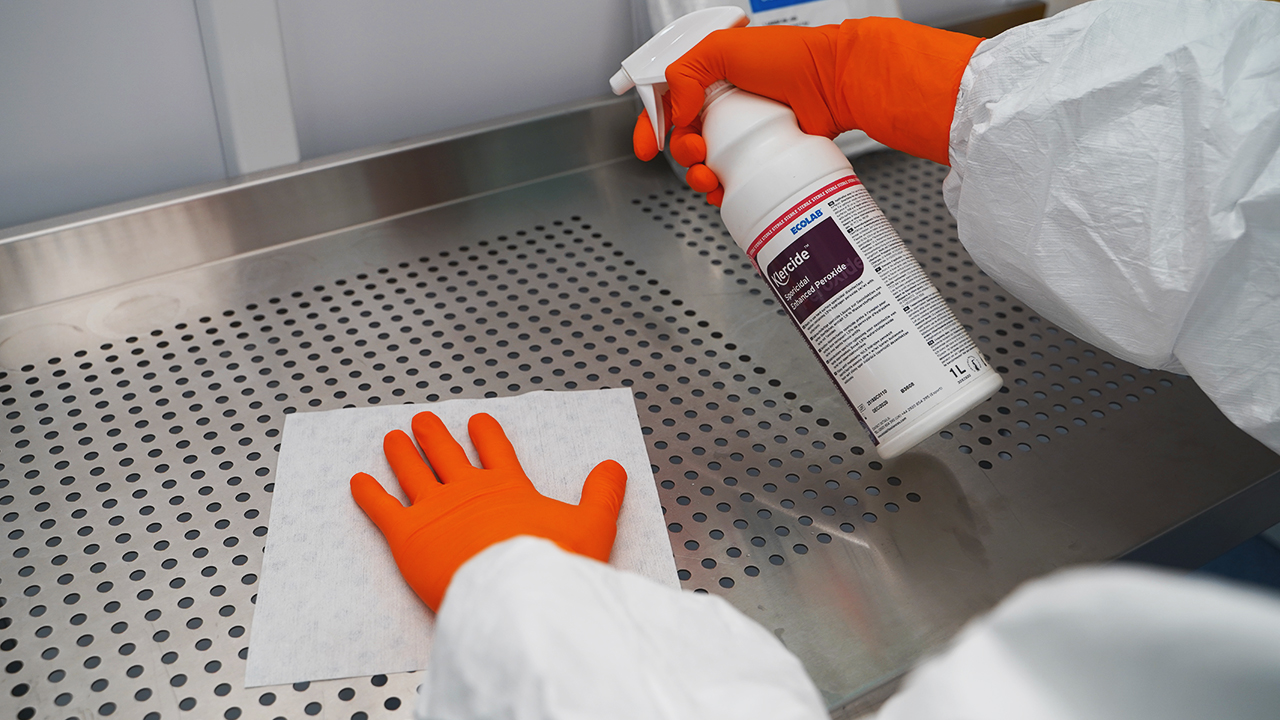
Maintaining a cleanroom environment is critical for compliance, minimising contamination incidents, and protecting product integrity. Cleanroom cleaning and disinfection regimes are a key part of that, and the choice of wipes can make all the difference.
From different material types to sterile options, there’s a wide variety of wipes available to suit various cleanroom classifications and production processes. In this blog, we’ll explore what cleanroom wipes are, the different types available, and best practices for using them.
What Are Cleanroom Wipes?
Cleanroom wipes are specifically designed for use in controlled environments where even microscopic contaminants can compromise processes or products. They are engineered to release minimal particles and fibres, making them suitable for environments where reusable cloths or traditional mopping systems may introduce risk.
Unlike everyday cleaning products, cleanroom wipes are made from materials and in manufacturing conditions that ensure low particle shedding, high absorbency, and compatibility with cleanroom-grade cleaning solutions. This makes them an essential tool for surface cleaning, spill control, and disinfection in ISO- and GMP-regulated spaces.
Different Types of Cleanroom Wipes
Polyester Wipes
Polyester cleanroom wipes are strong, low-linting, and ideal for high-grade cleanrooms (ISO class 3 – 5 and GMP grades A – B). Their smooth, durable surface makes them ideal for wiping down sensitive equipment and surfaces without snagging or leaving fibres.
Dry Wipes
Dry wipes require a compatible cleaning solution, such as alcohol or biocide, before use. This allows flexibility in choosing the disinfectant, making them suitable for various cleanroom classifications (ISO class 4 – 8 and GMP grades B – D).
Presaturated Wipes
These come ready-to-use and are pre-soaked with a measured and validated amount of cleaning solutions, reducing the risk of over-wetting and ensuring consistent results. Ideal for fast, efficient cleaning in environments where time and compliance are critical.
Sterile Wipes
Gamma-irradiated or aseptically processed, sterile wipes are suitable for aseptic processing areas and high-grade cleanrooms (ISO class 5 and GMP grades A – B). They’re individually packed or double-bagged to maintain sterility until use.
Nonwoven Wipes
Made from blends such as polyester and cellulose, nonwoven wipes are highly absorbent and cost-effective, making them ideal for spill control and general cleaning in lower-grade cleanrooms (ISO class 6 – 8 and GMP grades C – D).
Knitted Wipes
Produced using a knitted construction, these wipes combine strength and absorbency with minimal lint generation. They’re suitable for higher-grade cleanrooms where a stronger, yet low-shedding wipe is required.
Common Features of Cleanroom Wipes
Sporicidal
Wipes with sporicides are most effective at killing spores from cleanroom surfaces. The use of sporicidal wipes or agents must be included in the cleaning regime in all GMP cleanrooms to effectively tackle hard-to-kill microbes that standard disinfectants cannot deal with.
Low Residue
Designed to leave a minimal amount of residue after cleaning, ensuring a high level of cleanliness in the controlled environment. In GMP grades A and B facilities, cleaning agents and wipes should ideally be low residue to reduce the risk of introducing further contamination.
Isopropyl Alcohol (IPA)
A common cleaning and disinfection solvent used in pharmaceuticals, electronics, and medical device manufacturing cleanrooms. IPA is often used in combination with water, typically a 70:30 ratio, and is effective at removing a range of contaminants including oils, greases, and other residues.
Edge Treatment
During the manufacturing process, cleanroom wipes are cut to size in various ways to minimise particles. While cleanroom wipes can be made from the same fabric, the edge treatment determines the level of cleanliness it has. From least to most clean, this includes a knife cut edge, laser cut edge, sealed edge, ultrasonic sealed edge, and sealed border.
How to Use Cleanroom Wipes
Choosing the right wipe for your environment and application is the first step to effective cleanroom cleaning. Once selected, follow recommended wiping techniques to minimise recontamination:
- Never use circular wiping motions as they may redeposit contaminants onto cleanroom surfaces, leaving areas unclean.
- Wipe in one direction using parallel, overlapping strokes to ensure you don't miss any surface areas.
- Start at the cleanest area and move to the dirtiest, pulling the wipe towards you from back to front on horizontal surfaces, and from top to bottom on vertical surfaces.
- Lift the wipe after each strole to avoid redepositing particles.
The frequency of wiping will depend on your cleanroom protocol, but surfaces should be cleaned regularly and after any contamination event. Used wipes should be disposed of immediately unless using a product specifically designed for controlled reuse.
Surface cleaning is covered in our ISO and GMP training courses. For more information and to book a session, click here.
Overall, cleanroom wipes are a crucial tool in maintaining contamination control, with different types designed for specific environments and tasks. From high-grade polyester wipes to cost-effective nonwoven options, the right choice can improve efficiency, compliance, and product safety.