


 Supplying Cleanrooms Online for Over 20 Years
 Tailored Account Managed Solutions

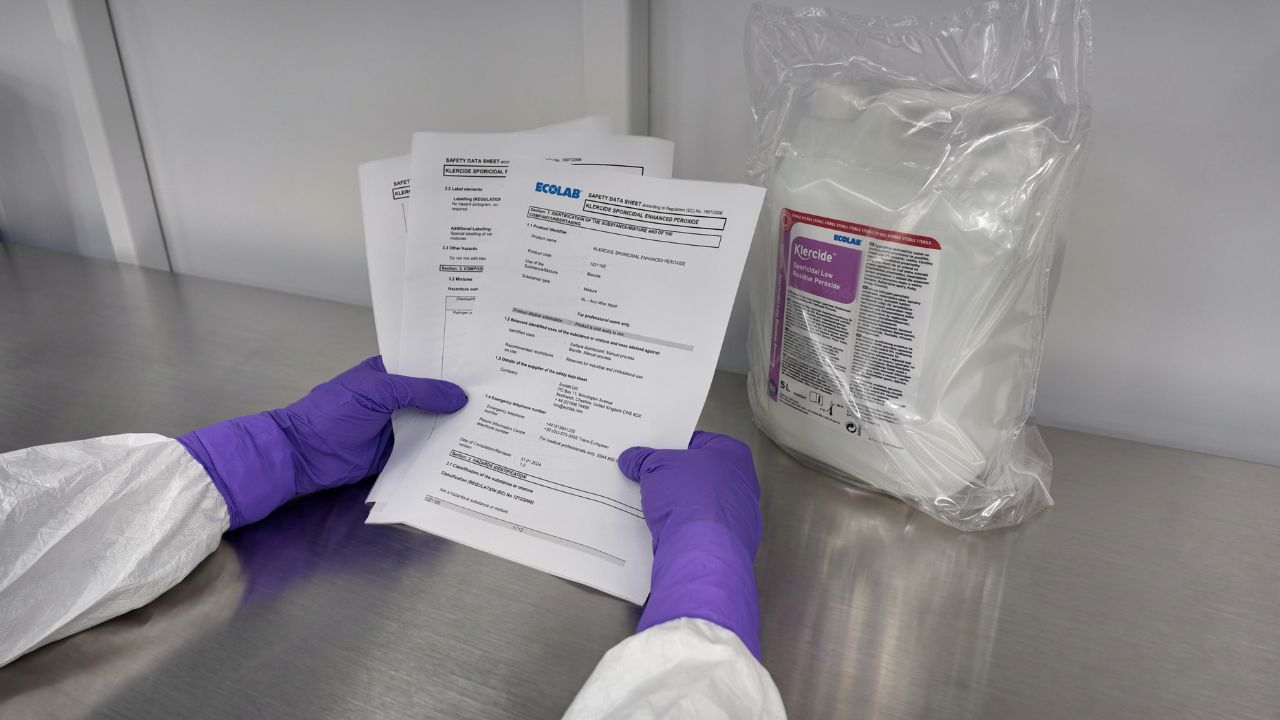
Dangerous goods is a crucial part of what we do, and we pride ourselves on our expertise and handling of dangerous goods for our clients who rely on these products for the day-to-day maintenance of their facilities. This is why we celebrate National Dangerous Goods Awareness Day!
National Dangerous Goods Awareness Day aims to inform and guide businesses with the safe handling, storage, and transport of dangerous goods items in line with legislation and regulations. This year's theme is focusing on 'limited quantities', specifically addressing the common pitfalls and requirements for shipping dangerous goods in small batches.
While suppliers and distributors are responsible for appropriately classifying, packaging, and transporting of dangerous goods, recipients and end-users also play a vital role once these items arrive on site. So, for this year's National Dangerous Goods Awareness Day, we'll be spotlighting dangerous goods documentation and how to understand the information that comes with every shipment.
What are dangerous goods?
Dangerous goods are chemical products, substances, and equipment that pose a risk of immediate danger to people, the environment, and/or mode of transport. Dangerous goods items are categorised and labelled based on the hazards it presents, including explosives, gases, flammable liquids or solids, oxidising substances & organic peroxides, toxic & infectious substances, radioactive substances and corrosives, along with a miscellany of dangerous goods that sit outside of the standard hazard classification.
Within a cleanroom, common dangerous goods items can include cleaning solutions, widely used alcohol, and biocidal products. These present hazards to the cleanroom environment, and regardless of risk level, dangerous goods should be handled, stored, and used in line with best practice and regulations to maintain safety across personnel, property, and product integrity.
What is a safety data sheet?
Safety data sheets (SDS) are documents that inform users of the safe supply, handling, use, and disposal of dangerous goods in a workplace environment.
Required by the UK REACH Regulation, and SDS contains key information of the item and details any potential hazards, allowing users to reduce the risk of harm and perform accurate risk assessment as required by the Control of Substances Hazardous to Health Regulations (COSHH).
Manufacturers and suppliers are responsible for assessing the hazards of dangerous goods products and preparing the appropriate documentation for their end-users.
Those who store and use these hazardous items in their workplace are responsible for training employees on how to handle, use, and respond to a dangerous goods incident appropriately, as well as how to interpret information effectively.
The key elements of a safety data sheet
All SDS are broken down into the following 16 sections as part of the Global Harmonised System (GHS), each containing vital information and details guidance on the handling and use of the dangerous goods items:
1.Identification of the substance/preparation and company: Helps you identify and confirm you've received the correct products and provides information on who to contact if you need further information.
2. Composition/information on ingredients: Details chemical ingredients and their concentrations, helping users understand what the product contains, particularly for health, medical, or regulatory purposes.
3. Hazard identification: Explains the product's hazards and includes hazard pictograms.
4. First-aid measures: Provides first-aid guidance if exposure occurs.
5. Firefighting measures: Supports emergency responders and trained personnel with how to safely respond to a fire involving the product.
6. Accidental release measures: Guidance on how to safely manage accidental spills while minimising risks to people and the environment.
7. Handling and storage: Provides recommended storage conditions and handling precautions.
8. Exposure control/personal protection: Outlines recommended personal protection equipment.
9. Physical and chemical properties: Provides technical information about the product's characteristics.
10. Stability and reactivity: Helps users identify situtations that could lead to dangerous reactions or product degradation.
11. Toxicological information: Outlines the possible health impacts associated with exposure to the product.
12. Ecological information: Outlines the possible environmental impacts associated with exposure/release of the product.
13. Disposal considerations: Details how to dispose of waste responsibly and in accordance with local regulations.
14. Transport information: Identifies the dangerous goods class, UN number, and transport requirements.
15. Regulatory information: Provides additional regulatory context that may apply to the user.
16. Other information: Includes additional information including date of issue/revision and abbreviations.
Understanding dangerous goods labels
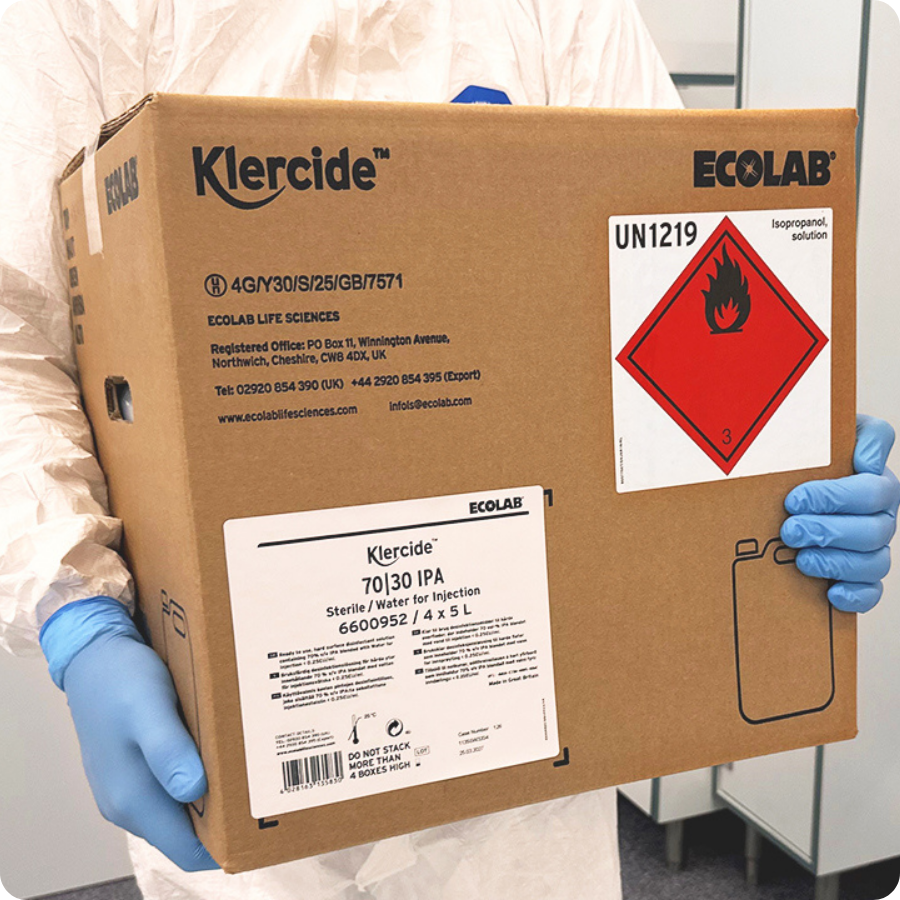
Dangerous goods labels must be used during the transport of hazardous items to effectively display the associated risks. Dangerous goods labels are part of the GHS, containing standardised colours, pictures, and class numbers to identify the hazards.
All dangerous goods items are recorded and identifiable by a United Nations (UN) four-digit number. For example, 'UN1203' is gasoline. There are currently over 4,000 UN numbers in use, many of which apply to groups or categories of materials with the same hazard.
Not all products which carry a GHS label are classed as a dangerous goods item, but in the instances that they are, the GHS pictorgam, label colour, and UN number will be used in combination to communicate its potential risks and classification.
Our commitment to dangerous goods at Cleanroomshop
At Cleanroomshop, we're committed to ensuring that we're fully compliant when shipping and transporting dangerous goods to maintain safety of personnel and vehicles involved in the entire transport chain - from dispatch at our site in the UK all the way to our customer's door.
Our team hold current IATA Dangerous Goods by Air certificates, with a total of over 20 years' experience with shipping dangerous goods items, so you can be sure that your orders will arrive safely and securely at your site in line with the latest legislation and regulatory requirements.
If you have any questions around dangerous goods, documentation, or our approach to transporting these items to your facility, don't hesitate to contact a member of our team.