

 Supplying Cleanrooms Online for Over 20 Years
 Tailored Account Managed Solutions

Cleanroom contamination can come from a range of sources, including personnel, equipment, tools, and by-products of facility applications.
Both ISO 14644 and EU GMP define requirements for cleanroom cleanliness and contamination control, including limits for airborne particles. However, regardless of cleanroom classification, grade, or industry, specialised and tailored cleaning regimes are critical for effective contamination control and compliance, including rotational cleaning.
But what is rotational cleaning and should every cleanroom adopt this decontamination regime? In this blog, we’ll explore the purpose of rotational cleaning, how this can support contamination control, and which cleanrooms may benefit from implementing it.
What is rotational cleaning?
Picture a cleanroom. Perhaps you imagined an EU GMP grade A pharmaceutical facility, or an ISO class 7 facility manufacturing satellite components. Regardless of application or classification, the build-up of dirt, cell debris, residues, and micro-organisms can occur and must be removed via cleaning and, where appropriate, disinfection regimes. The terms ‘cleaning’ and ‘disinfection’ are commonly used interchangeably to describe the removal of contaminants within a controlled environment; however, they serve very distinct purposes.
In order to fully understand rotational cleaning, we must first specify what is meant by ‘cleaning’ and ‘disinfection’, and the purposes they serve within a cleanroom.
What is cleanroom cleaning?
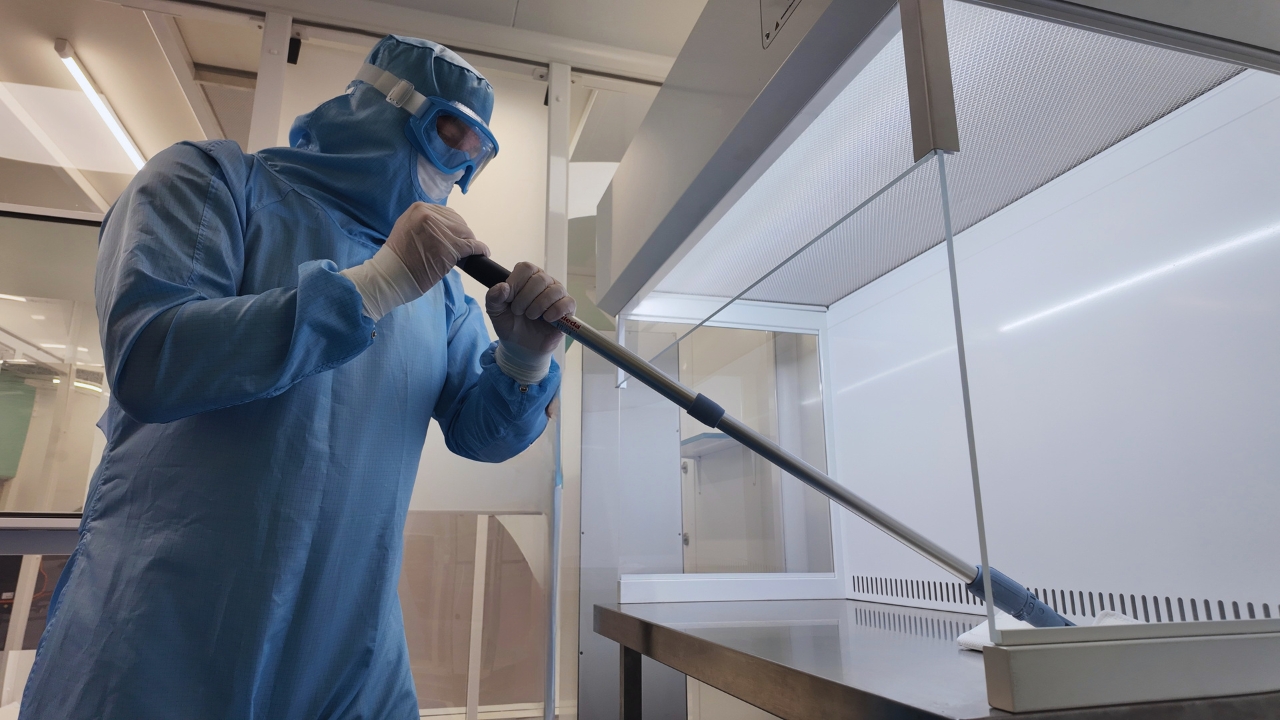
Cleanroom cleaning is the physical removal of particles found on the cleanroom’s surfaces including dirt, fluff, skin flakes, hair, debris, etc. Cleanroom cleaning methods include wiping, vacuuming, and mopping the workstations, walls, floors, and other surfaces of the controlled environment.
These forms of contaminants may or may not be visible to the human eye, and whilst they aren’t viable like bacteria or viruses, they can still cause significant harm to your products and processes. No-one wants a hair within a pharmaceutical vial or dust compromising the performance of a delicate electrical component’s circuit board. Cleanroom cleaning methods are therefore vital to support the integrity and quality of your applications.
What is cleanroom disinfection?
Cleanroom disinfection is the application of a chemical agent specifically designed to kill viable contamination including microbes, bioburden, and living elements of contamination. Not only can this form of contamination have critical impacts on your applications, potentially compromising the safety and performance of products, but they can also threaten the health and safety of your cleanroom operators and end users.
Cleanroom cleaning and disinfection
A cleanroom’s classification and application will influence whether cleaning or disinfection is the primary decontamination method. For instance, an ISO class 7 injection moulding cleanroom may place greater emphasis on cleaning regimes as part of its contamination control strategy as high volumes of non-viable particles are generated during production. However, a facility producing vaccines will prioritise effective removal of contaminants and reduction of microbes through validated cleaning and disinfection processes, helping to maintain the quality and safety of pharmaceutical products.
Rotational cleaning and the kill spectrum
Despite the name, rotational cleaning specifically refers to the use of multiple disinfection agents to tackle a wide range of the kill spectrum.
The ‘kill spectrum’ is often used to define the range of micro-organisms that you’re able to kill during your decontamination regime, by using multiple disinfectants with varying modes of action. The choice and quantity of disinfection chemicals ultimately increase your coverage of the kill spectrum, allowing you to effectively eliminate a wide variety of micro-organisms.
For instance, alcohol-based disinfectants tend to be very effective against micro-organisms by causing their cell wall to lose its structure and collapse. However, this choice of disinfectant isn’t very effective against endospores, unlike hydrogen peroxide and chlorines.
By combining the multiple disinfectants as part of your rotational cleaning regime, you’ll be covering a wider range of contamination concerns which may have otherwise been missed if only one disinfectant is used.
It might seem logical to then choose strong and highly reactive agents to tackle your contaminants; however, one thing to keep in mind is its compatibility with the wider controlled environment. Are surfaces and furniture resistant to these types of chemicals or will repeated exposure cause damage or corrosion?
Not only that, but the way disinfectants are used within the controlled environment is just as important as selecting an appropriate type and understanding its mode of action. Appropriate cleaning should be performed before any disinfection to remove debris and residues that could interfere with the effectiveness of the disinfectant. Additionally, operators should also be trained on cleaning and disinfection methods to ensure that factors such as the chemical’s concentration, contact time, and application technique are all followed correctly, to ensure that surfaces are adequately cleaned and contamination is effectively removed.
Which cleanrooms need to use rotational cleaning programmes?
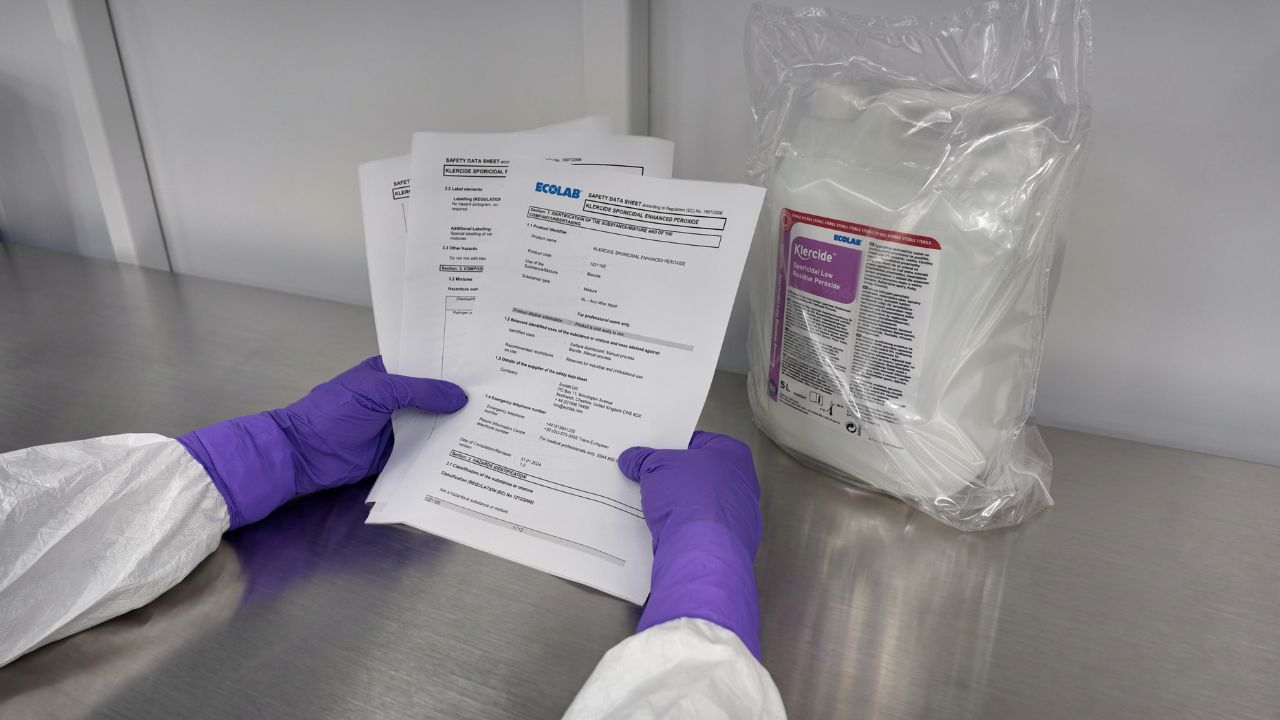
So, which cleanrooms should use rotational cleaning methods as part of their decontamination strategy? Well, under EU GMP Annex 1, the current requirements state that these facilities “shall be cleaned and disinfected thoroughly in accordance with a written programme” and that “more than one type of disinfecting agent shall be used” with “the periodic use of a sporicidal agent”. The disinfection process must be validated to demonstrate that the disinfectants are effective under the actual conditions they’re being used for, with the approach justified through the contamination control strategy.
This applies across EU GMP grades A – D, although disinfectants used in grades A and B specifically must be sterile before use, whereas grades C and D will determine whether this is necessary based on risk assessments and documented within the contamination control strategy.
The ISO 14644 standard does not currently prescribe the use of multiple disinfectants or rotational cleaning, ISO 14644-5:2025 requires a cleaning programme based on an assessment of the “contaminants of concern” and includes “disinfection methodology, if applicable”. So, if a single disinfectant has been demonstrated to provide adequate microbiological control, and there is no identified risk requiring additional agents, then there may be no benefit in introducing rotation simply as a precautionary measure.
Ultimately, in both EU GMP and ISO 14644 environments, decontamination choices should be based on the contamination of concern, rather than the cleanroom classification alone. The contamination control strategy should address the contamination risks and what controls are required, with justifiable evidence that the approach works.