

 Supplying Cleanrooms Online for Over 20 Years
 Tailored Account Managed Solutions

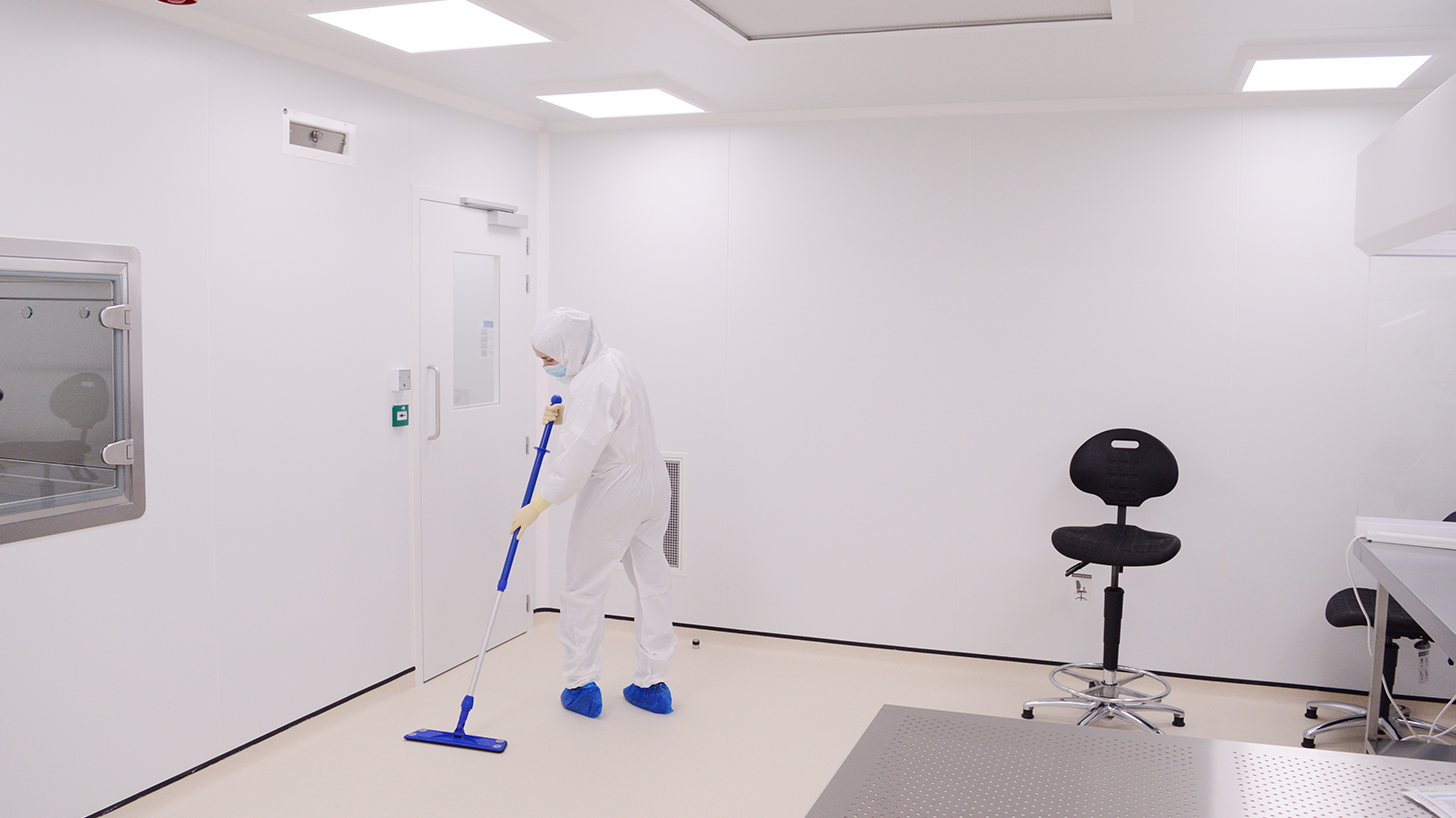
How do you ensure your cleanroom remains hygienic and contaminant-free? For those who utilise controlled environments as part of their production process, contamination control should be a top priority. With strict cleanliness guidelines from standards including ISO and GMP, ensuring a robust disinfection and sanitisation protocol is paramount.
While vacuuming, dusting, and wiping down equipment all contribute towards maintaining a clean environment, cleanroom mopping is a crucial step in the cleaning process to remove contaminants and particles from the controlled space.
In this blog, we’ll cover 5 common cleanroom mopping mistakes that are leaving your cleanroom vulnerable to contaminants and incompliance, what you can do to improve your cleaning procedures, and how to choose the right mopping system for your controlled environment.
5 Common Cleanroom Mopping Mistakes
Cleanroom mopping is a specialised cleaning procedure to maintain a controlled environment. How often you clean depends on the cleanroom’s nature of operations and classification, both ISO and GMP guidelines specifies a regular, well-defined cleaning and disinfection protocol based on cleanroom risk factors.
Cleanroom mopping extends beyond the environment’s floors – it also covers walls, windows, doors, and ceilings. All areas of your cleanroom should be mopped using the appropriate techniques, tools, and consumables to ensure you’re maintaining a hygienic, controlled environment.
Whilst mopping a cleanroom may seem simple, there are several common errors cleanroom users continue to make. Take a look below at the five cleanroom mopping mistakes and how you can avoid them.
1. Misuse of solutions or tools
Cleanroom mopping procedures require specific tools and solutions – selecting those that are not designed for controlled environments can promote contaminants. Utilising traditional mops, rags, and sponges can cause excess shedding, and are difficult to effectively sterilise following the cleaning procedure.
When choosing solutions and tools for cleanroom mopping, it’s best to opt for flat or stringless mops – not only do they not release fibres into the environment but are incredibly versatile and allow you to clean other flat surfaces including walls, doors, and ceilings. It’s also best practice to thoroughly clean and disinfect your mopping system after every use – this ensures that you’re not redistributing contaminants back into your controlled environment.
2. Single bucket system
Utilising a single bucket system when mopping your controlled environment makes your cleaning process futile. Single bucket systems cause contamination by respreading dust, dirt, and debris back onto your surfaces.
Instead, opt for a multi-bucket system to ensure effective cleaning, with one bucket for the mopping solution, one for wringing out the mop with the contaminated solution, and one for purified water to rinse your mop before placing it back into the solution.
3. Improper mopping technique
Improper mopping techniques can lead to areas being missed and contaminants remaining in your cleanroom. Additionally, skipping steps in the rinsing-and-wringing sequence can redistribute contaminants back into your controlled environment. Effective cleanroom mopping requires a systematic approach with specific techniques to mitigate contamination and ensure complete coverage of your controlled environment.
When mopping your cleanroom, it’s best practice to start in the area furthest away from the entry point (typically the cleanest area), using a multi-bucket system, and follow the 50% overlapping method – unidirectional strokes while working backwards.
4. Using tap water
It might seem acceptable to use tap water for cleaning your controlled environment, especially when you’re using disinfectants and cleaning solutions, however, this can introduce additional contaminants including minerals and bacteria.
To minimise contamination, especially in areas adhering to strict regulatory guidelines, it’s best practice to use sterile, purified water as part of the cleanroom cleaning process.
5. Incorrect gowning
Even if your tools, solutions, and techniques are all appropriate for mopping your cleanroom environment, selecting the incorrect gowning for the cleaning process can lead to contamination and reduce disinfection effectiveness.
Choosing the Right Mopping System for Your Cleanroom
When choosing a mopping system for cleanroom cleaning, it’s important to consider the suitability of the products and materials. They should be easy to use, have a hygienic design, and be durable, abrasion-resistant, and (in some cases) autoclavable. Cleanroom size, grade or classification, available storage space, and type of contaminations are all important factors for consideration.
Some popular options include:
Presaturated single-use mop wipes
✅ Effective at cleaning and disinfecting, including physical removal of contaminants
✅ Thin substrate – ideal for small areas
✅ No bucket system hardware - space saving
✅ Requires regular changing - reduces cross contamination
✅ Single use - gives a validated level of performance every time
✅ Suitable for ISO class 3+ and GMP grades A/B
Reusable mopheads, presaturated at point of use
✅ Effective at cleaning and disinfecting, including physical removal of contaminants
✅ Absorbent substrates – ideal for larger areas
✅ Bucket system hardware for optimised application
✅ Requires regular rinsing – reduces cross contamination
✅ Suitable for ISO class 4+ and GMP grades A/B
Single-use mopheads, presaturated at point of use
✅ Effective at cleaning and disinfecting, including physical removal of contaminants
✅ Absorbent substrates – ideal for larger areas
✅ Bucket system hardware for optimised application
✅ Requires regular changing – reduces cross contamination
✅ Single use – gives a validated level of performance every time
Cleanroomshop have a full range of cleanroom mopping systems from market-leading brands including Hydroflex, Ecolab, and Vileda Professional. Browse our range of mopping trolleys and carts, mopheads, mop frames, and mop handles, all designed for wall and floor surfaces.